Button Footprints: A Nursery Embroidery Design That Feels Like a Hand-Drawn Memory
As someone who’s stitched thousands of designs for clients—from boutique baby boutiques to Etsy sellers launching their first embroidered pillow line—I opened Button Footprints expecting charm. What I got was something quieter, warmer, and more intentional: a design that doesn’t shout “cute,” but settles in like a well-loved lullaby.
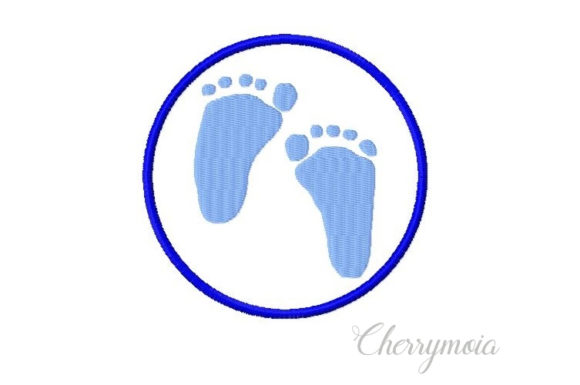
I tested it on a soft organic cotton baby blanket—intended for a local nursery shop’s spring collection—and the moment the needle paused at the final satin stitch, I knew this wasn’t just another clip-art-style footprint. It’s subtle, slightly asymmetrical, with gentle curved edges and tiny rounded “buttons” spaced along the sole like soft punctuation. No sharp corners. No over-engineered realism. Just warmth, restraint, and unmistakable handmade soul.
Where Button Footprints Truly Belongs (and Where It Doesn’t Try Too Hard)
This isn’t a bold statement piece for a trucker cap or a high-contrast tote bag meant to grab attention from across a craft fair aisle. Button Footprints shines brightest where intimacy matters: newborn onesies, muslin swaddle tags, linen tea towels folded beside a crib, or the inside hem of a hand-sewn quilt. Its scale is inherently tender—best appreciated up close, not at arm’s length.
I stitched it on a lightweight knit onesie using tear-away + light cutaway stabilizer, and the result held beautifully—even after two gentle machine washes. The stitch density feels thoughtful: enough fill to read clearly on baby-soft fabric, but never so dense it stiffens the garment. That balance makes it ideal for baby embroidery, yes—but also for personalized gifts where comfort and wearability are non-negotiable.
It also works surprisingly well as an embroidered patch. I hooped twill, stitched it out, and trimmed closely—no fraying, no puckering. The curves stayed smooth, and the button details retained definition. That opens doors for small shop owners: think matching sibling patches on denim jackets, or a set of three sizes (newborn, 6mo, 12mo) sold as a growth milestone kit.
Real-World Stitching Notes You’ll Actually Use
Here’s what I learned stitching Button Footprints across five different substrates:
- On stretchy fabric? Yes—but only with proper stabilizer. Skip the basic tear-away alone. A light cutaway underneath prevents distortion around the arch curve.
- On dark fabric? Test your thread contrast first. Light ecru or oatmeal thread reads softer than stark white; it keeps the mood grounded, not clinical.
- Small hoop sizes? It fits comfortably in a 4x4 hoop, but avoid cramming it into anything smaller. The spacing between buttons needs breathing room—or they’ll blur together in fill stitch.
- Textured fabrics (like terry cloth or bouclé)? Proceed with caution. The fine detail in the toe curve can get lost. Stick to smooth weaves for maximum clarity.
- Curved surfaces (caps, mugs, curved pillow seams)? Not ideal. The shape assumes a flat plane. On a baseball cap front, the outer curve stretched slightly—subtly, but enough to soften the button definition.
What This Design Says—Without Saying a Word
When customers see Button Footprints on a finished product, they don’t see “machine embroidery design.” They see care. Intention. A quiet nod to new beginnings. That emotional resonance directly lifts perceived value—especially for handmade product buyers who pay premiums for authenticity over polish.
For Etsy sellers, that translates to stronger buyer engagement: fewer “Is this really handmade?” questions, more “Can you add a name?” follow-ups. For craft business owners building brand consistency, it slots seamlessly into a soft, earthy, minimalist aesthetic—no rebranding needed.
And for designers licensing assets? Button Footprints avoids overused tropes (hearts, stars, cartoon animals), making it a refreshingly ownable element in your design assets library. It pairs effortlessly with simple monograms or single-word embroidery (“June,” “First,” “Little”), letting you build cohesive collections without visual fatigue.
A Few Practical Designer Habits Before You Stitch
Before adding Button Footprints to your next custom apparel order or small shop product lineup, do these three things:
- Test on scrap fabric that matches your final substrate—not just cotton broadcloth. If you’re stitching on bamboo jersey, test on bamboo jersey.
- Check your digital embroidery file preview in black-and-white mode. Does the shape hold up without color cues? With Button Footprints, it does—proof of strong silhouette design.
- Review licensing terms carefully. Since this is a digital embroidery file only, confirm whether commercial use (e.g., selling finished embroidered onesies on Etsy) is permitted—and whether resale of the file itself is restricted. When in doubt, contact the creator directly.
Also: always inspect small details in your embroidery software before stitching. Zoom in on the button centers—are they clean satin stitches or overly dense fill? With Button Footprints, they’re cleanly defined, but not all designs are.
Final Thought: It’s Not Just a Footprint—It’s a First Impression
In a market flooded with fast, flashy, algorithm-friendly embroidery files, Button Footprints stands out by doing less. It doesn’t try to be everything. It’s not a holiday embroidery motif or a wedding gift centerpiece. It’s a whisper—not a fanfare.
That’s its strength. For the designer stitching a limited-run nursery collection, the Etsy seller curating meaningful baby milestones, or the small shop owner building heirloom-quality finished products, Button Footprints delivers exactly what it promises: gentle, grounded, quietly unforgettable.
Just remember: every great embroidery project starts with respect—for the fabric, the machine, the customer, and the quiet power of a well-placed stitch. Button Footprints earns that respect, one soft curve at a time.