Baby Walrus: A Craft Fair-Ready Embroidery Design
First Impression: Soft, Playful, and Instantly Recognizable
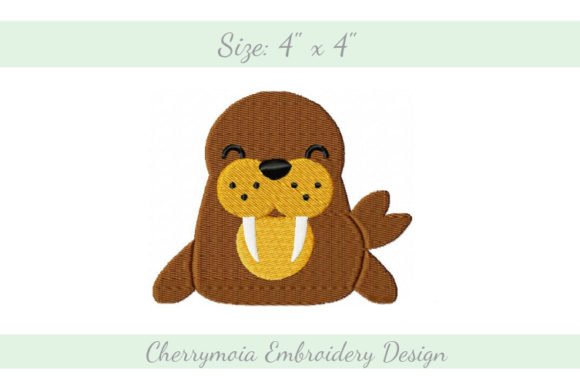
As an embroidery designer who’s prepped over 200 craft fair booths in the past decade, my first reaction to Baby Walrus was immediate: it’s soft-cute—not saccharine, not cartoonish, but warmly expressive. It lands squarely in the “gentle whimsy” zone: friendly enough for baby gifts, charming enough for adult tote bags, and distinctive enough to stand out among dozens of foxes, owls, and bunnies in the Baby Animals category. That matters—especially when shoppers are scanning your booth in under three seconds.
Where Baby Walrus Shines on Craft Fair Products
Tote bags: A centered Baby Walrus at 3.5"–4.5" works beautifully on natural canvas or linen-blend totes. It reads clearly from six feet away, adds personality without overwhelming, and pairs effortlessly with minimalist branding or hand-stamped tags.
Aprons and tea towel embroidery: On a chef-style apron pocket or folded corner of a flour-sack towel, Baby Walrus becomes a quiet signature—a detail that invites closer inspection and sparks conversation (“Oh! Is that a walrus? How sweet!”). Its rounded shapes translate well across fabric texture, especially when stitched with matte cotton thread.
Embroidered patches and small pouches: Here’s where Baby Walrus proves its versatility. As a sew-on patch (2.25"–2.75"), it holds up beautifully in batch production and gives small shop products instant handmade credibility. On drawstring pouches or zippered toiletry bags, it acts as both decoration and subtle product identifier—ideal for Etsy sellers bundling matching sets.
Pillow covers and market bags: At 5"–6", Baby Walrus gains presence without looking heavy. It anchors neutral linen or oatmeal-toned pillow covers with warmth and approachability—key for boutique makers targeting modern farmhouse or Scandinavian-inspired buyers.
What Makes Baby Walrus Sell—Beyond Cuteness
It’s not just adorable—it’s legible. Unlike some animal motifs with intricate whiskers or layered shading, Baby Walrus relies on clean outlines, balanced proportions, and intentional negative space. That means:
- It photographs crisply for Etsy listings and printable mockups—even on mobile screens.
- It scales reliably from 2" (for patches) to 6" (for pillow fronts) without losing charm or clarity.
- It feels repeatable: whether you’re stitching 12 tote bags before Saturday’s fair or producing 50 embroidered caps for a local boutique order, consistency stays high.
That repeatability is gold for commercial embroidery. When your machine runs smoothly and your customers recognize your style across product types, you build brand consistency—and trust.
Careful-Use Notes Every Embroiderer Should Know
Even the most charming machine embroidery design has limits. With Baby Walrus, pay close attention to:
- Dense stitch areas: The face and flippers often carry higher stitch density. On thick fabrics like denim or textured terry cloth towels, use cutaway stabilizer—not tear-away—to prevent puckering.
- Small details: Those tiny eyes and smile lines? They’ll vanish below 1.75". Avoid using Baby Walrus smaller than 2" on dark fabric unless you confirm thread contrast in advance.
- Curved surfaces: Caps and curved market bag handles demand precise hooping. Test Baby Walrus on scrap fabric *with the same cap style* you’ll use—some designs distort on low-profile front panels if stitch angles aren’t optimized.
- Fabric texture: On heavily woven tea towels or slubbed linen, reduce top tension slightly and opt for shorter satin stitches where possible. This keeps Baby Walrus looking crisp, not fuzzy.
Real-World Designer Checks Before Booth Day
I never send Baby Walrus into production without these steps:
- Test the embroidery file on scrap fabric matching your final product—same weight, weave, and color.
- Check thread contrast: light gray thread on ivory linen? Yes. Same thread on navy canvas? No—swap to cream or off-white.
- Review spacing between elements: Does the flipper clear the edge cleanly on a 3" hoop? Does the whole design fit comfortably within your standard cap hoop?
- Inspect stitch density visually—not just on screen. Overly dense fills cause stiffness and slow down production; too sparse looks unfinished.
- Use the right stabilizer for each substrate: cutaway for knits, tear-away for stable wovens, fusible for lightweight linens.
- Create at least one real mockup—not just a digital preview. Hold it in natural light. Walk five feet away. Ask a non-embroiderer what they see.
- Compare Baby Walrus across three fabric colors: light, medium, and dark. Does it retain character on all three?
- Confirm commercial licensing applies to finished products—especially if you’re selling via Etsy, wholesale, or pop-up markets.
Why Baby Walrus Strengthens Your Booth & Brand
In a sea of handmade goods, Baby Walrus does more than decorate—it connects. It draws smiles, invites touch, and signals thoughtful curation. When paired with quality fabric and clean finishing, it elevates even simple items (like a plain cotton pouch) into desirable small shop products. Customers remember how something made them feel—and Baby Walrus feels warm, genuine, and quietly joyful.
For Etsy sellers, it’s a strong visual anchor in listings—especially when styled with natural props and consistent color palettes. For craft fair sellers, it’s a reliable conversation starter that converts browsers into buyers. And for embroidery business owners building a library of design assets, Baby Walrus fits seamlessly alongside other Embroidery files—scalable, licensable, and ready for repeat use across seasons.
Bottom line? Baby Walrus isn’t just another digital embroidery file. It’s a smart, sale-ready craft fair product—when stitched with intention, tested with care, and presented with pride.