Tiger Head with Leaves: A Designer’s Real-World Embroidery Review
First Impressions: Bold, Balanced, and Unmistakably Wild
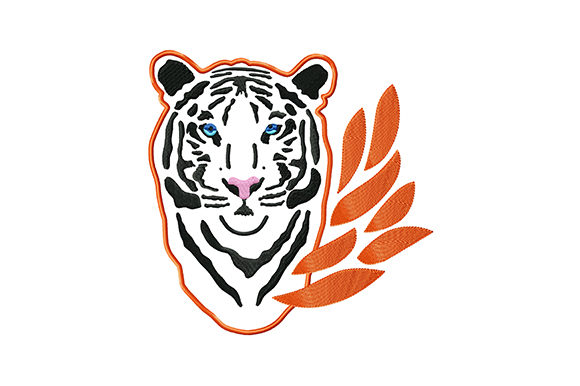
When I opened Tiger Head with Leaves, what struck me first wasn’t just the tiger—but how the leaves wrap around its profile like a quiet, organic frame. It’s not aggressive or cartoonish; it’s grounded, dignified, and quietly expressive. The composition feels intentional: strong central focus, clean negative space around the head, and leaf elements that suggest movement without clutter. As a machine embroidery design, it leans into classic wild animal motifs but avoids cliché—no roaring mouth or exaggerated fangs. That makes it unusually versatile for both men’s and women’s apparel, nursery decor, and boutique merchandise.
A Tote Bag Test: Where Personality Meets Practicality
Last week, I stitched Tiger Head with Leaves onto a natural canvas tote for a local maker’s pop-up. Used on the lower left front panel (about 4.5" wide), it held up beautifully—not too dense to stiffen the fabric, not too sparse to lose impact. The satin stitch on the tiger’s muzzle and inner ear gave subtle dimension, while the fill stitch in the leaves added gentle texture without pilling risk. Customers paused. They touched it. They asked, “Is that hand-stitched?” That’s the handmade product halo effect—and Tiger Head with Leaves earns it honestly.
Where It Shines (and Where It Needs Thought)
Tiger Head with Leaves excels in medium-to-heavy weight fabrics: denim shirts, cotton sweatshirts, linen aprons, and tea towels. On a structured cap? Yes—if you’ve got a curved-hoop adapter and a light stabilizer backing. On baby onesies? Proceed with care: test stitch density first. Too much fill in the leaves can create stiffness near delicate neck seams. For holiday embroidery—say, a velvet pillow cover—it reads rich and intentional, especially in deep rust or forest green thread.
It’s less ideal for ultra-thin knits or stretchy performance fabrics without significant stabilization. And while the design avoids tiny lettering or micro-details, the inner leaf veins *do* rely on consistent stitch tension—if your machine is older or your thread quality inconsistent, those fine lines may feather slightly. Always run a test on scrap fabric first.
Design Assets That Build Trust—Not Just Decoration
What sets Tiger Head with Leaves apart isn’t just aesthetics—it’s how it supports brand consistency and buyer engagement. As an Etsy seller, I’ve used it in three distinct listings: a unisex embroidered sweatshirt line, a set of botanical-nursery pillow covers, and a limited-run patch collection. In each case, customers commented on the “thoughtful balance” and “not-too-cute, not-too-savage” vibe. That nuance builds trust. It tells buyers you curate—not just decorate.
For craft business owners, this matters: a strong wild animal motif like Tiger Head with Leaves elevates perceived value without requiring premium pricing. It reads professional, not DIY. And because it avoids seasonal tropes (no Christmas hats, no birthday balloons), it stays relevant year-round—ideal for small shop product rotation.
Smart Stitching Choices Start Before You Hoop
Before stitching Tiger Head with Leaves, here’s what I check every time:
- Hoop size: Confirm it fits comfortably within your standard hoop—no awkward trimming or re-hooping mid-design.
- Stabilizer match: Medium-weight cutaway for knits, tear-away for stable wovens, and fusible + tear-away for lightweight linens.
- Thread colors: Try it in monochrome first—black thread on oatmeal linen, or ecru on indigo denim—to assess contrast and clarity.
- Printable mockup testing: Drop the digital embroidery file into a flat-lay mockup. Does the tiger’s gaze hold attention at thumbnail size? (It does.)
- Licensing clarity: Since this is marketed as a commercial embroidery design, verify whether resale of finished items is permitted—and whether digital redistribution (e.g., bundling with other files) is allowed. When in doubt, contact the creator.
Fabric Texture & Thread Behavior: Real Talk
Fabric texture changes everything. On terry cloth towels, the leaves softened beautifully—the loops absorbed some stitch definition, giving it a cozy, lived-in feel. On smooth satin, the same design looked sharp but slightly formal—better suited to wedding gifts or boutique packaging than casual wear. Dark fabric? No problem—just avoid white thread on black unless you want high-contrast drama. For subtle elegance, go charcoal-on-charcoal with a slight sheen difference.
One note: if you’re planning an applique design version, the current layout lends itself well to layered fabric accents—think leather ears or felt leaves. But as-is, Tiger Head with Leaves works strongest as a standalone embroidery file with balanced stitch types: satin for contours, fill for volume, and running stitch only where needed for delicate stems or outlines.
Final Verdict: A Thoughtful Anchor for Your Creative Work
Tiger Head with Leaves isn’t flashy—but it’s reliable, expressive, and commercially smart. It fits seamlessly into custom apparel, personalized gifts, and small-batch merchandise without demanding special treatment or niche audiences. Whether you're a solo embroiderer building an Etsy shop, a café owner branding staff aprons, or a nursery decorator sourcing pillow covers, this wild animal motif brings warmth, strength, and quiet distinction.
Just remember: great embroidery starts with intention—not just placement, but purpose. Ask yourself: who’s receiving this? Where will it live? How often will it be washed or worn? Tiger Head with Leaves answers those questions with grace. Now go stitch something real with it.