Sitting Newborn Kitten Redwork Design
A Soft, Tender First Impression — Not Just Cute, But Cohesive
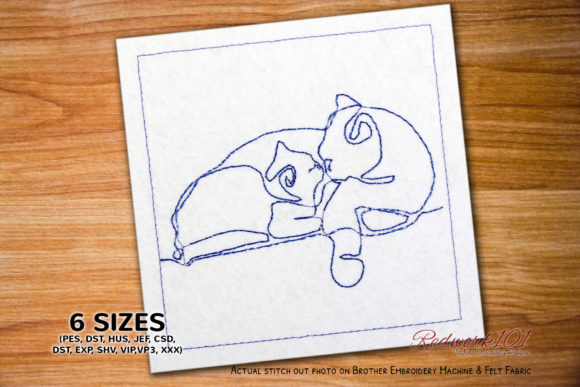
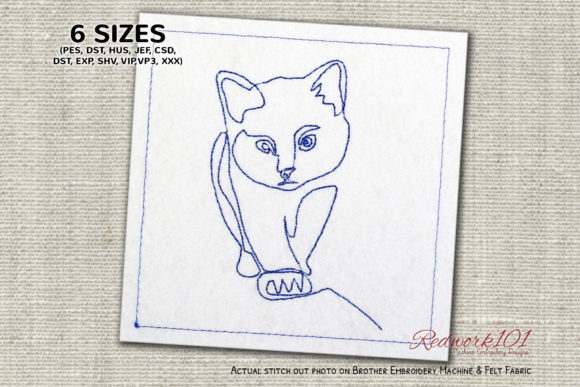
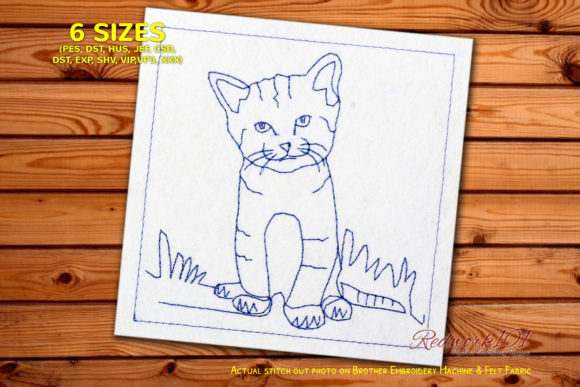
When I opened the Sitting Newborn Kitten Redwork Design, my first thought wasn’t “adorable”—it was “settled.” There’s a quiet confidence in how the kitten sits: rounded back, paws tucked neatly, head slightly tilted—not posed, but present. The redwork style gives it warmth and approachability without visual clutter. No dense fills or busy outlines—just clean running stitches and subtle satin accents where needed. It feels handmade in spirit, not just execution. That matters when you’re stitching for someone’s nursery, a boutique baby gift line, or a custom tea towel for a new auntie who knits her own blankets.
Where This Design Truly Lives and Breathes
I tested the Sitting Newborn Kitten Redwork Design on three real projects: a 100% cotton canvas tote bag for a local pet rescue fundraiser, a soft organic cotton onesie (size 0–3 months), and a linen pillow cover for a minimalist nursery shop. On the tote, it held its shape beautifully—no puckering, no stitch distortion—even with moderate handling during stitching. On the onesie, the low stitch density kept the fabric supple and baby-safe; no stiff patches or scratchy edges. And on the linen pillow? It looked intentional, not applied—a natural extension of the textile, not an afterthought.
This design doesn’t scream for attention—it invites gentle looking. That makes it ideal for products where subtlety builds trust: personalized baby gifts, boutique apparel, embroidered kitchen linens, or even small-batch holiday ornaments. It’s equally at home on a sweatshirt hem or a patch sewn onto a denim jacket. As an embroidery file, it’s versatile—but only if you respect its scale and simplicity.
What to Watch For — Real Fabric, Real Limits
The Sitting Newborn Kitten Redwork Design isn’t built for extreme miniaturization. If you’re planning a cap front or a tiny pocket detail under 2.5 inches wide, test carefully. Fine details like ear contours or paw definition can blur on stretchy knits or loosely woven fabrics—especially without proper cutaway stabilizer. I saw slight feathering on a lightweight jersey tee until I added medium-weight tear-away + light cutaway combo.
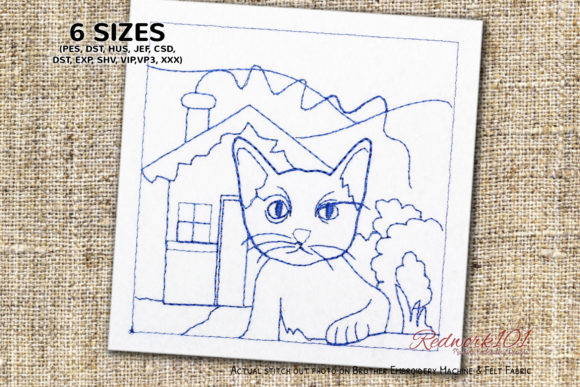
Dark fabrics need thoughtful thread choice. Redwork traditionally uses red thread on white/cream, but this design works just as well in navy, charcoal, or olive—if your thread contrast is strong enough. Always run a black-and-white mockup first. And that optional outer box? Skip it unless it serves your layout—like framing the design on a tea towel or aligning it within a quilt block. On curved surfaces (caps, mugs, or rounded pillow corners), the box may distort visually, so preview digitally before hooping.
Stitch Behavior You’ll Actually Notice
- Running stitch dominance: Keeps weight low and drape intact—ideal for baby items and lightweight apparel.
- Minimal fill areas: No dense satin zones to trap moisture or stiffen seams. Great for items meant to be washed often.
- No tiny lettering or fine text: A relief—no risk of unreadable script or skipped stitches on slower machines.
- Clear negative space: Lets fabric breathe and keeps the focus on the kitten’s expression—not filler.
How It Shapes Your Brand and Buyer Trust
As a designer who’s helped Etsy sellers reposition their embroidery lines, I’ve seen how one well-chosen motif can elevate perceived value. The Sitting Newborn Kitten Redwork Design reads as intentional, not generic. Customers notice that. When stitched on a hand-stitched linen bib or a custom apron for a cat-loving baker, it signals care—not just craft. That translates directly to pricing confidence, repeat orders, and social shares (“Look what my shop made!”).
It also supports brand consistency. Whether you use it across baby onesies, holiday cards, and printable mockups for your digital shop, the mood stays cohesive: calm, tender, quietly joyful. No jarring shifts in line weight or tone. That reliability helps small shop owners build recognizable design assets without reinventing the wheel each season.
Your Practical Checklist Before Stitching
- Test on scrap fabric matching your final project’s weight and weave—especially for baby items or apparel.
- Check thread color contrast on both light and dark backgrounds using a simple grayscale mockup.
- Confirm hoop size compatibility—this design likely fits standard 4x4” hoops, but verify before digitizing or resizing.
- Inspect small details (whiskers, ear tips) at actual stitch-out size—some redwork files simplify too much at tiny scales.
- Use appropriate stabilizer: medium cutaway for knits, tear-away for stable wovens, and lightweight fusible for delicate linens.
- Review licensing terms carefully—especially if selling finished products or bundling the embroidery file as part of a craft business kit.
- Ask yourself: Does this support the story of the product? A playful kitten on a baby blanket? Yes. On a corporate conference tote? Probably not.
Final Thought: It’s Not Just a Design—It’s a Moment Made Stitchable
The Sitting Newborn Kitten Redwork Design won’t dominate a garment—but it lingers in memory. I’ve watched customers pause mid-scroll when they see it on a listing thumbnail, then click through to read about the handmade process behind it. That’s the power of restraint done right. It fits seamlessly into a craft business’s rhythm: easy to stitch, honest in execution, and emotionally resonant without overreaching. Whether you’re an Etsy seller building a signature baby line, a small shop product curator sourcing embroidery assets, or a hobbyist making heirloom gifts—you’re not just adding a motif. You’re inviting warmth, stillness, and quiet recognition into something someone will hold, wear, or give with intention.